

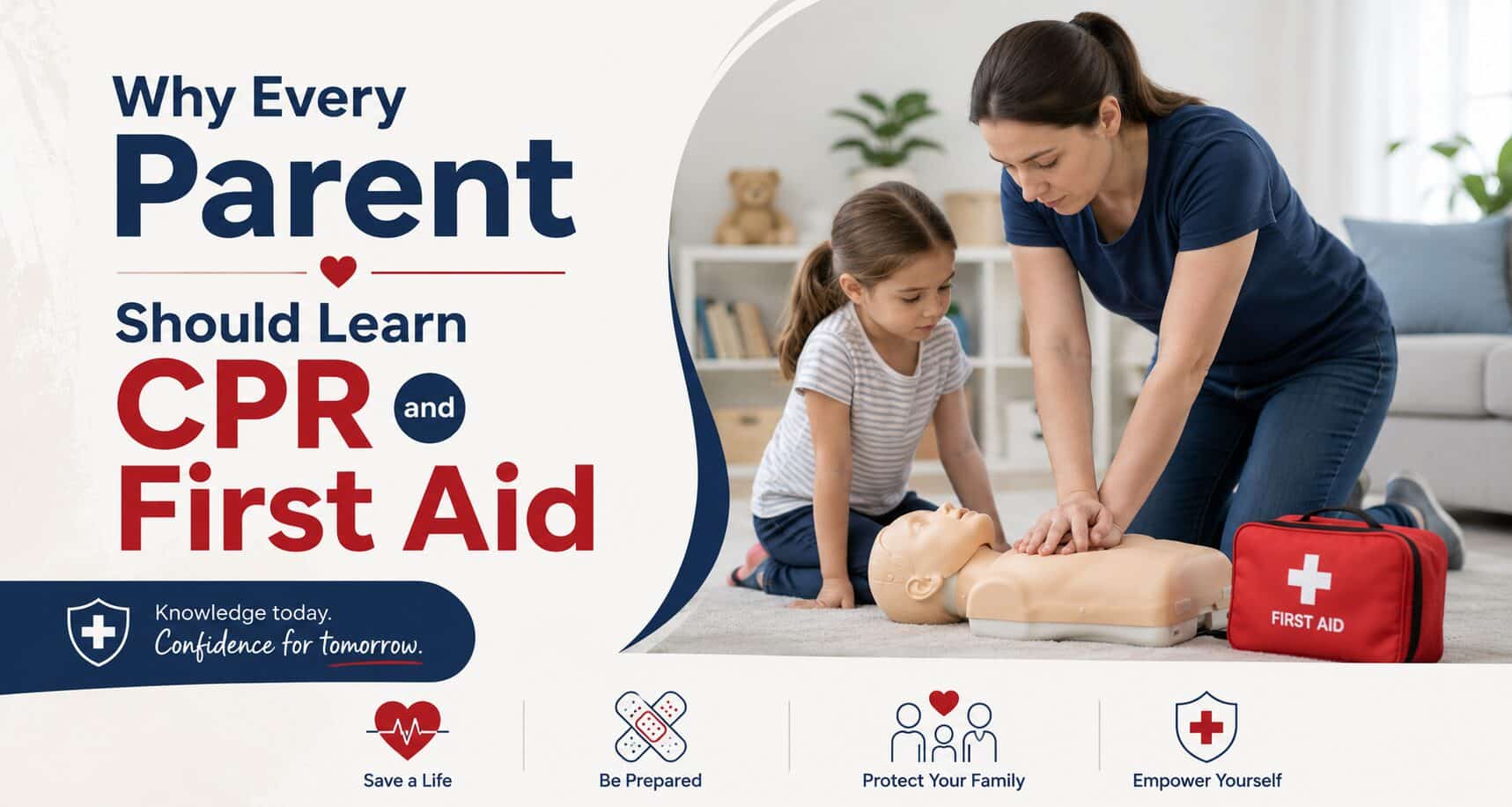
Parents worry when something terrible happens to their children at home. Whether the infant is choking from a grape or the child was pulled from a pool unconscious, time is of the essence until an ambulance arrives. Immediate CPR can double or even triple the chance of surviving a cardiac arrest, making it very important for parents to know what to do immediately when something happens.
Why are kids more susceptible to accidents?
Children are naturally curious and are still developing physically, so they are at a higher risk for accidents than adults. Hazards in the home are choking, burns, falls and accidental poisoning or overdose. In addition, playground injuries, drowning and injury while playing sports are the leading reasons accidents occur involving children outdoors. If a parent can perform basic first aid while waiting for the paramedics, he or she can stabilize his or her child and prevent any additional harm until help arrives.
What are CPR and First Aid?
Cardio-Pulmonary Resuscitation (CPR) is a form of emergency care that keeps the blood flowing when the heart has stopped. CPR uses chest compressions and rescue breaths to keep the victim alive while waiting for advanced medical help and is effective for victims of drowning and cardiac arrest. CPR for infants is different than for adults. Chest compressions are done with less force and only two fingers are used to compress the infant’s chest.
First Aid is treatment given to an injured person, and/or to an individual who may have an illness, before professional medical assistance arrives.
H3: Examples of First Aid include: controlling excessive bleeding, treating a burn, relieving choking, placing an unconscious individual into a recovery position, and utilizing an Automated External Defibrillator (AED).
Reasons for Certification
The primary reason to obtain your Certification is the potential to “Save Your Child’s Life”. An individual who has taken a First Aid Course will be able to respond faster, and make better decisions during extremely stressful situations, while also feeling much more confident in the event of a medical emergency. Also having this confidence will allow a Certified Parent to help others, in addition to their own family, during a public medical emergency.
Emergency Preparedness is more than just having a First Aid Kit in your home; it is being aware of how to use the items contained within the First Aid Kit.
How to Become Certified
Participating in a CPR course will allow you to obtain hands-on training, professional instruction, and a Nationally recognized certification. The time frame for most courses ranges from 4 to 8 hours. Generally, CPR and First Aid certifications are valid for 2 years, and are subject to being updated with revised Guidelines established by the Canadian Red Cross or the Heart & Stroke Foundation upon completion of an annual Refresher Course.
Conclusion
If you choose to take a certified first aid or CPR Course, it could be one of the best financial decisions you have made as a parent. The time you spend learning how to help an injured child (or adult) will far outweigh any cost associated with the training. Emergency situations can happen at any moment and having this knowledge could mean the difference between a devastating situation and a story that your child will tell for many years to come. Don’t delay; sign up for a certified first aid class today!
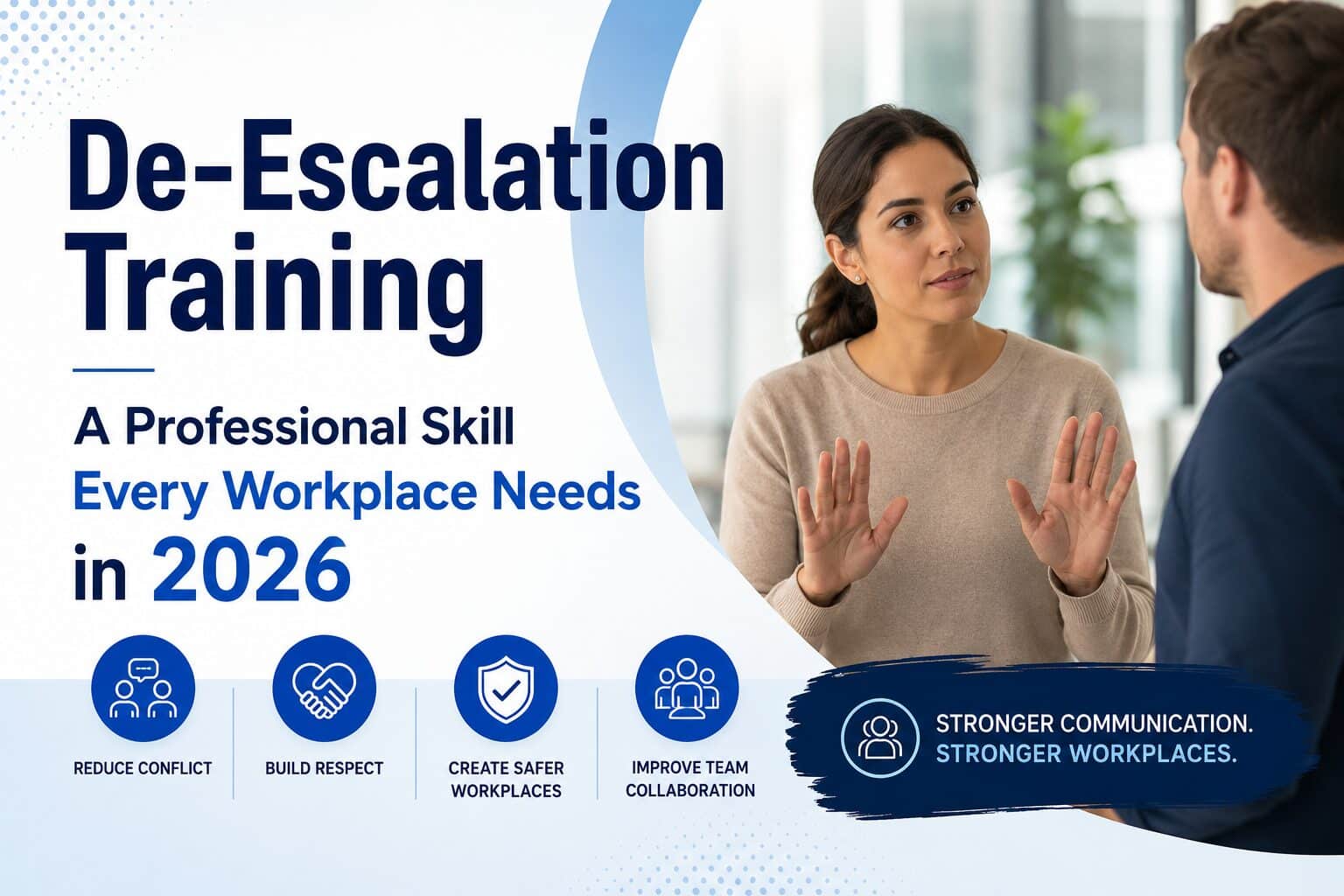
The ability to manage conflict preemptively (before it escalates) is not just ‘nice to have’, but rather is now a vital requirement due to the current high-pressure and fast-paced working environment. Tense working conditions are present in all fields from Security to Healthcare to Retail to all public-facing professions. The distinction between a trained professional and an untrained/unprepared individual is knowing how to respond appropriately.
De-escalation training provides you with a structured and evidence-based method of using communication, empathy, and situational awareness to diffuse conflict in order to avoid escalation, and rather than react impulsively you will be able to assess and adapt your actions/communication with respect to guiding the interaction toward a calm conclusion each and every time.
What Is De-Escalation Training and Why Does It Matter?
De-escalation training is an essential component of safe and professional practice for all professionals that deal with the public. De-escalation is the act of creating an environment of lower intensity (to reduce the probability of a conflict or dangerous situation) through the use of both verbal and non-verbal communication techniques that take place in a controlled environment.
In Ontario, it is very clear for employers and professionals what their legal/ethical obligations are with respect to providing reasonable/proportional responses to inappropriate situations. Through the use of conflict management training programmes, you will ensure your staff understands what their legal and ethical obligations are and can apply them with confidence under pressure.
What Participants Will Learn from Flash Training Hub’s De-escalation Training Program
Flash Training Hub’s De-escalation Training Program consists of five modules that build upon previously developed skills and allow you to apply those skills in practical situations. Each of the modules consists of online instruction and individual work that allows you to learn at your own pace. The five modules consist of the following topics:
- Module 1: Understanding the Law and Ethics Regarding De-escalating Conflict in Canada
The participant will learn about the legislation and ethics that govern the actions of individuals in Ontario.
- Module 2: Communication and Empathy Techniques Used for De-escalating Crisis
The participant will learn how to communicate and demonstrate empathy, while using active listening to de-escalate potential crisis situations.
- Module 3: Applying De-escalation Techniques through Simulated Crisis Scenarios
The participants will complete on-line simulation and testing of the de-escalation theories and techniques learned in Modules 1 and 2.
- Module 4: Understanding and Identifying Individual Behaviors
The participant will learn to recognize the signs of individual behavior, prior to an event, and to use non-verbal communication to maintain control of the de-escalation process.
- Module 5: Documentation and Reporting of Incidents
The participant will learn to prepare documentation that meets the legal requirements for accountability, and to use the documentation to assist with continued improvement in de-escalation processes.
Each of the five modules consists of 30–45 minutes of training, allowing the individual plenty of time to complete the module around their work schedule. The program will end with a final quiz that will test the participant on all five modules. Those individuals who successfully complete all five modules and the final quiz, will receive a certificate. The certificates will be valid for 24 months from the date issued.
Who Should Attend Conflict Management Training?
This course is for anyone who regularly interacts with the public or manages people in difficult situations (i.e., emergency services personnel). If you have ever been unsure of how to deal with an increasing challenge at work, this program was developed for you.
Prior experience is not required; all that is needed is the desire to learn, and be engaged and develop as a professional.
The Business Rationale: Why Companies Invest in Customer De-escalation/Risk Management Training
De-escalation training produces not only individual skills but also provides tangible benefits to the organization. Companies taking part in Conflict Training Programs have reported the following benefits to their organizations on a consistent basis:
- Fewer workplace incidents/fewer complaints
- Reduced liability and improved regulatory compliance
- Increased confidence of staff and decreased turnover of staff in high-stress roles
- Greater customer trust and improved customer satisfaction
- Safer and more respectful workplace for employees and customers
Flash Training Hub offers corporate and team enrollments for organizations to train groups of employees. Training can be conducted at client-selected locations based on the size and needs of the group.
Get Your Certificate Today by Enrolling in De-Escalation Training
The skill of successfully resolving a conflict can help protect individuals, advance careers, and create a workplace that employees feel safe working within. By attending the Conflict De-Escalation Training provided by Flash Training Hub, you will not only receive a certificate, but will also develop the necessary skills to successfully de-escalate any conflict professionally with confidence and competency.
This is a completely online and self-paced program that can be completed from the comfort of your own home throughout Canada. Your certificate is valid for two years and is easily renewed to maintain freshness.
If you would like to take the next step into the workforce with the skills mentioned above, then visit flashtraininghub.com today.

Are you looking to take your report writing skills to a higher standard? This course is right for you. This advanced-level course is designed for security professionals who have already developed foundational report-writing skills and are ready to elevate their documentation abilities to a higher standard.
Building on the core concepts learned in Effective Report Writing for Security Personnel, this course focuses on refining writing techniques, improving clarity and accuracy, and applying critical thinking to complex security incidents.
Participants will learn how to craft reports that are not only factual and objective but also structured for legal, investigative, and organizational purposes. The course emphasizes real-world application through scenario-based exercises and in-depth case analysis.
Are you looking to take your report writing skills to a higher standard? This course is right for you. This advanced-level course is designed for security professionals who have already developed foundational report-writing skills and are ready to elevate their documentation abilities to a higher standard.
Building on the core concepts learned in Effective Report Writing for Security Personnel, this course focuses on refining writing techniques, improving clarity and accuracy, and applying critical thinking to complex security incidents.
Participants will learn how to craft reports that are not only factual and objective but also structured for legal, investigative, and organizational purposes. The course emphasizes real-world application through scenario-based exercises and in-depth case analysis.